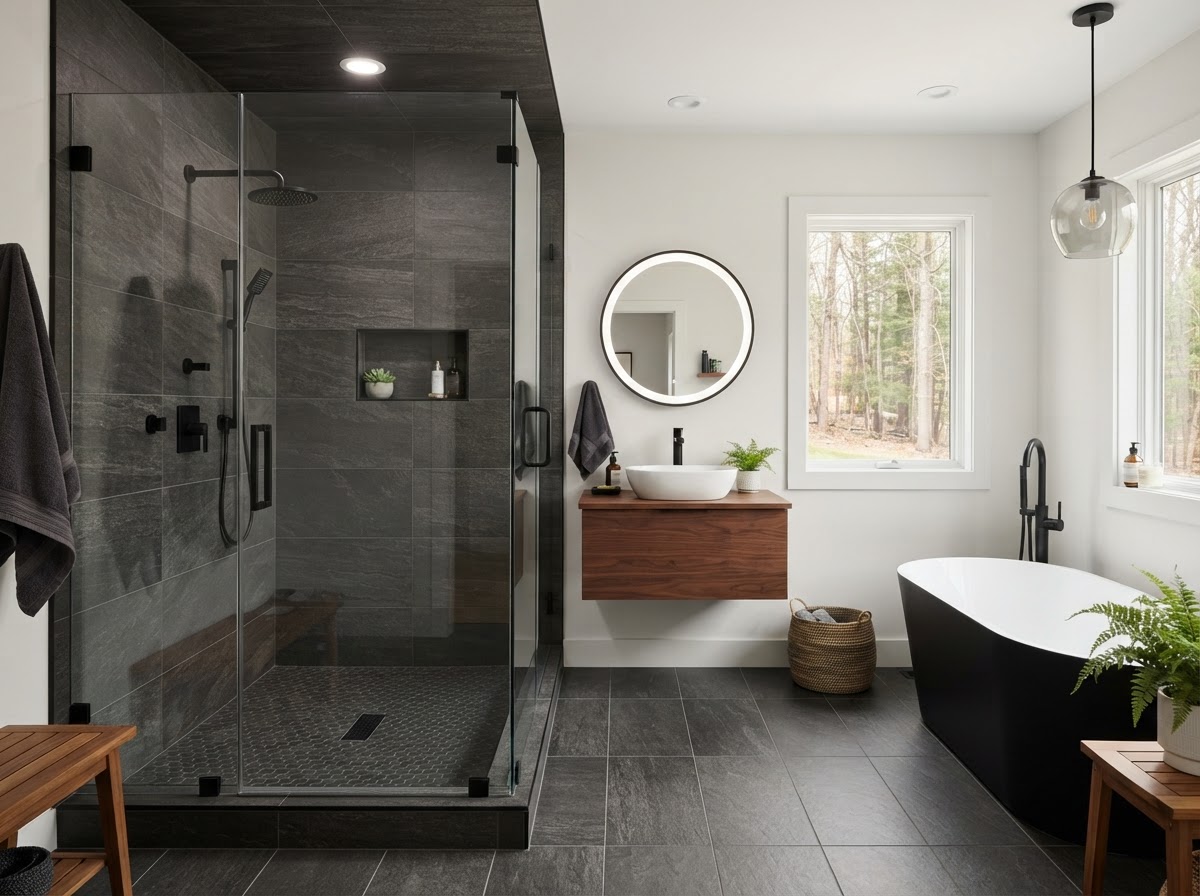
Bathrooms and mudrooms take more abuse than any other rooms in a Connecticut home. Between snowmelt, rain gear, shower overspray, and humidity, the flooring in these spaces has to handle constant moisture without warping, staining, or becoming a slip hazard. Choosing the right material up front prevents expensive subfloor repairs later.
Porcelain and ceramic tile
Tile remains the benchmark for wet areas. Porcelain in particular is dense, nearly impervious to water, and available in formats that mimic stone, wood, and concrete. A properly installed tile floor with a sealed grout line can last for decades and shrugs off standing water. The trade-offs are that tile is cold underfoot, hard on dropped items, and can be slippery when wet — which is why texture and a good mat matter in a shower or entry.
For shower surrounds, curbless entries, and custom niches, tile is usually the only material that gives you the design flexibility and waterproofing you need. Our bathroom tile installation work focuses on proper waterproofing beneath the tile, not just the visible surface.
Luxury vinyl tile (LVT)
LVT offers the look of stone or ceramic in a warmer, more forgiving surface. Because it is fully waterproof and softer underfoot, it is a strong choice for bathroom floors where you want comfort and moisture resistance without the cold of tile. Modern LVT also tends to offer better slip resistance than polished tile, which matters in a wet room.
Luxury vinyl plank (LVP)
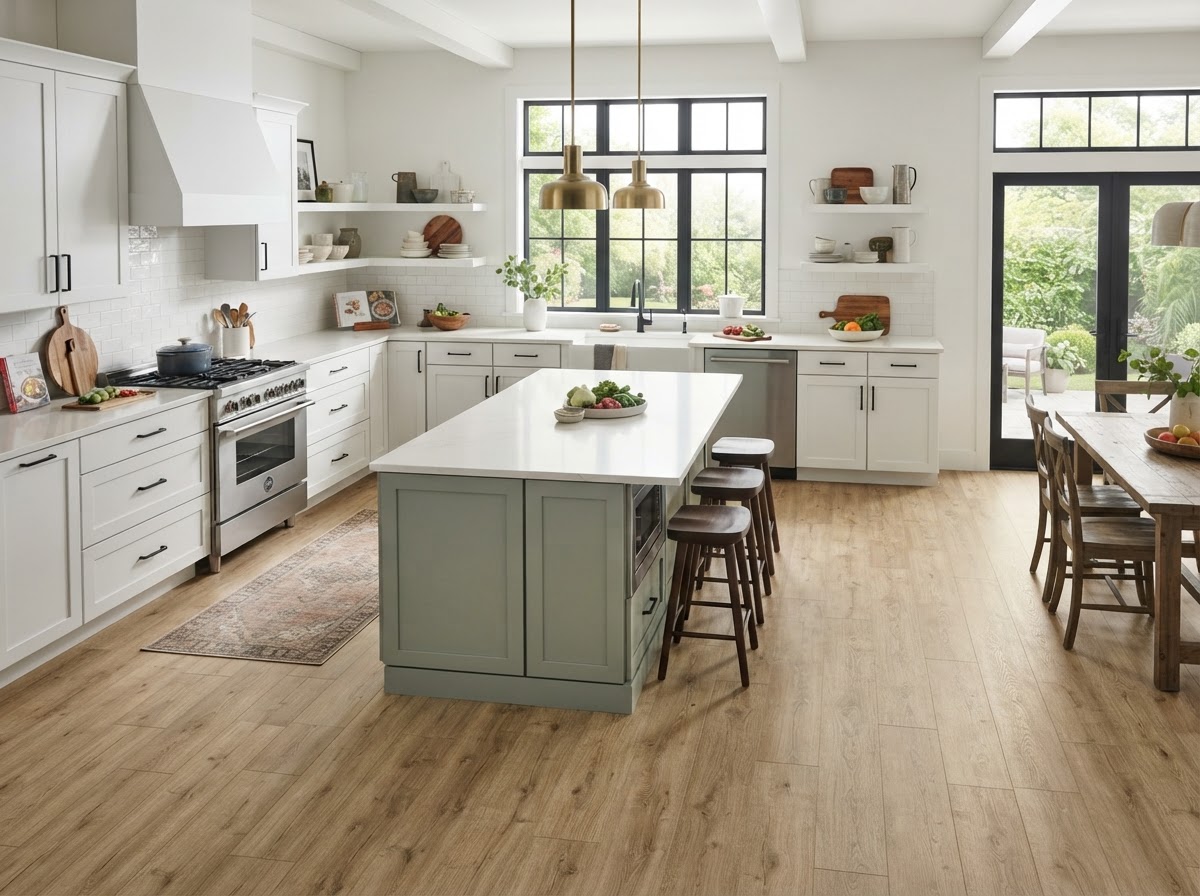
For mudrooms in particular, LVP is a practical favorite. It handles tracked-in snow, salt, and mud, cleans up with a damp mop, and does not cup when wet. A wood-look plank also transitions cleanly from a hallway hardwood into the entry, so the mudroom feels like part of the home rather than a separate utility space.
What to avoid in wet areas
- Solid hardwood: prone to cupping and staining from standing water.
- Laminate: the fiberboard core swells permanently if water reaches the seams.
- Carpet: traps moisture and odors; never suitable for a bathroom or mudroom floor.
- Unsealed natural stone: some stones are porous and need regular sealing to resist water.
Installation matters more than the material
Even the best waterproof flooring fails if the installation is sloppy. In a bathroom, the waterproofing membrane beneath tile, the slope to the drain, and the seal at transitions are what actually keep water out of your subfloor. In a mudroom, a flat subfloor and tight seams prevent water from working underneath the planks. This is why professional installation is especially important in wet areas.
Making your choice
For a bathroom, tile and LVT are both excellent; tile wins on longevity and design, LVT wins on warmth and comfort. For a mudroom, LVP and tile both handle the abuse well, with LVP offering an easier install over existing subfloors. The best way to choose is to compare samples in the actual room. We bring waterproof options to your home during a free in-home estimate — explore our bathroom tile installation, luxury vinyl tile installation, and luxury vinyl plank installation services to get started.