Homeowners across Bethel, Danbury, and the surrounding towns often ask the same question: how long can I wait before refinishing my hardwood floors? The honest answer is that there is no single number. A lightly used guest room floor may go a decade or more between refinishes, while a busy entryway with pets and kids might need attention far sooner. The key is knowing what to look for.
Signs your hardwood is ready for refinishing
- Water drops soak in rather than beading up — the protective finish has worn through.
- Visible scratches, dull spots, or gray discoloration in high-traffic paths.
- Cupping or slight board edges where moisture has caused movement.
- Previous spot repairs or wax buildup that no longer matches the surrounding floor.
- Sun fading near windows that leaves one side of a room noticeably lighter.
The water-bead test is one of the simplest checks. Drop a few drops of water on the floor in an out-of-the-way spot. If the finish is intact, the water beads up. If it soaks in and darkens the wood within a few seconds, the protective layer is gone and the floor is exposed to damage.
How long does a hardwood finish last?
A well-applied polyurethane or hardwax finish in a typical Connecticut household often performs well for many years in low-traffic rooms and less in busy areas. Entryways, hallways, kitchens, and homes with large dogs tend to wear faster. The finish lifespan is less about a date on the calendar and more about how the room is used.
Refinishing vs. restoration
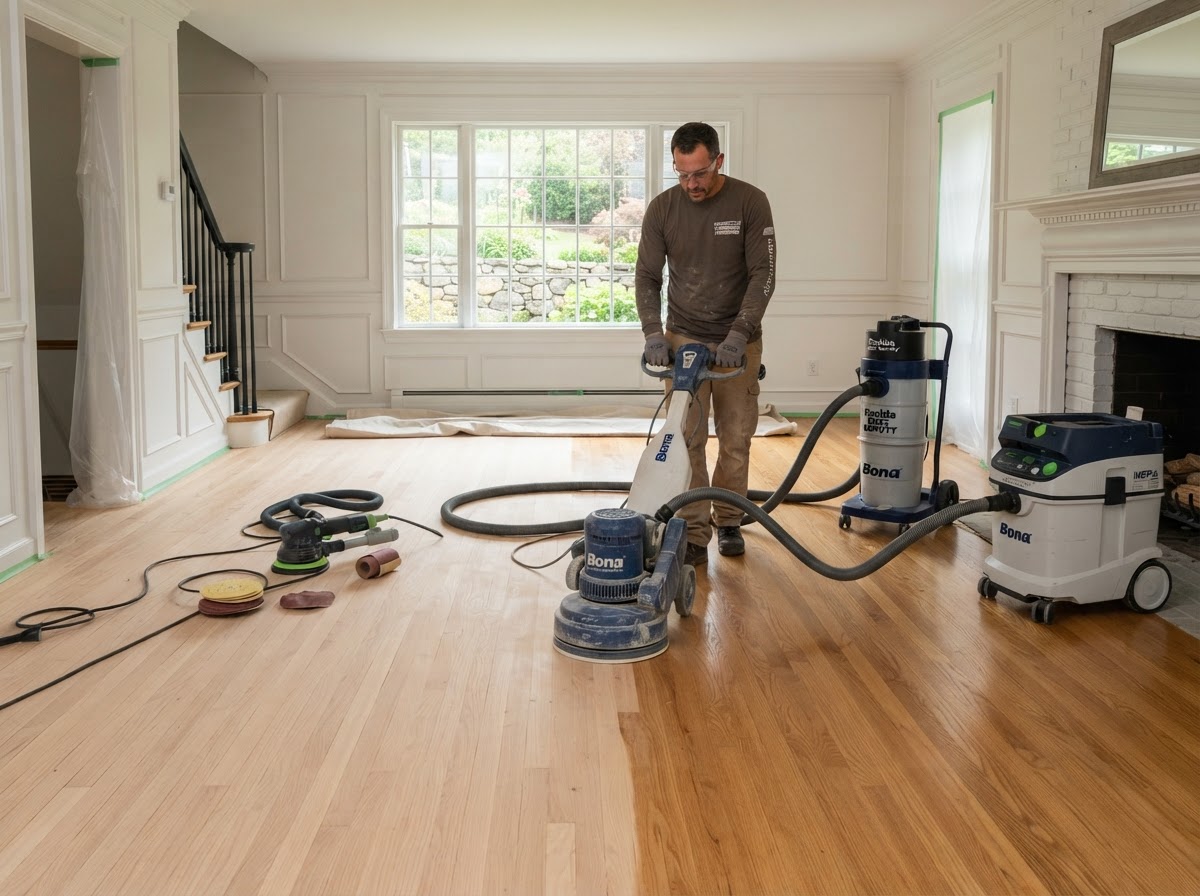
Not every tired floor needs a full sand down to bare wood. Sometimes a light screening and recoat — scuffing the existing finish and applying a fresh topcoat — is enough to restore sheen and protection without the dust and downtime of a full refinish. A full sand and refinish is reserved for floors with deep scratches, stains, or damage that a recoat will not hide.
For older or historic homes, restoration may be the better framing. Board weaving to replace damaged sections, matching antique grain, and preserving the original character all fall under hardwood floor restoration rather than a standard refinish.
What affects the timeline?
- Foot traffic: Hallways and entries wear faster than bedrooms.
- Pets: Claws accelerate finish wear, especially near doors.
- Sunlight: UV exposure fades finishes and wood over time.
- Maintenance: Felt pads, rugs, and prompt spill cleanup extend finish life.
- Humidity: Connecticut's seasonal swings stress both wood and finish.
Planning your refinishing project
If your floor is showing several of the signs above, it is worth having a professional assess whether a recoat or a full refinish is the right move. Dust-controlled sanding systems keep the process far cleaner than older equipment, and modern finishes cure to a durable surface that protects your investment for years. You can learn more on our hardwood floor refinishing and hardwood floor sanding pages, or request a free in-home estimate to have your floor evaluated in person.